
Behind the Brown Box

Behind the Brown Box
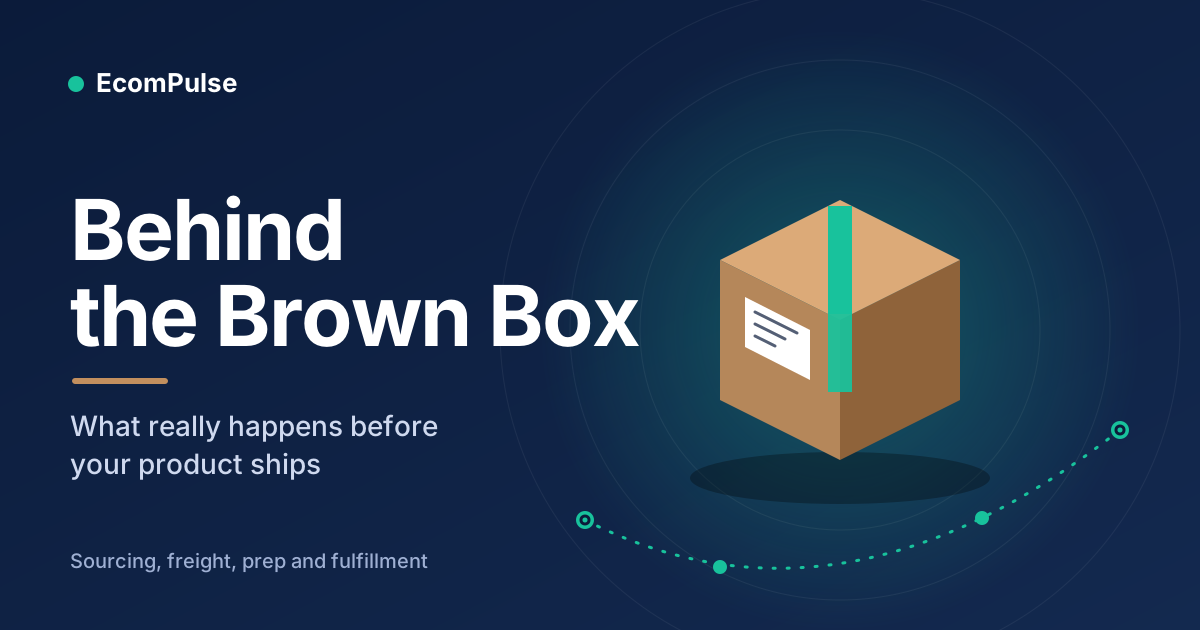
Every brown box hides a supply chain. Here is how it works.
A customer on Amazon, eBay or TikTok Shop sees a listing, taps “Buy”, and two days later a brown box shows up. To them it is simple. To a seller, that box is the final link in a chain with at least five stages, and a weak link anywhere can cost sales, money or even your whole store. In this guide we open the box and show you what goes on behind the brown box, so you can plan your marketplace business with fewer surprises.
The journey of a marketplace order
Here is the big picture before we go deeper. Each stage has its own risks, timelines and costs.
| Stage | What happens | Common risk |
|---|---|---|
| Sourcing | Choose a product and a reliable supplier | Poor quality, unreliable factories |
| Freight | Move stock from supplier to the marketplace warehouse | Delays, customs, stock-outs |
| Prep | Label, pack and bundle to marketplace rules | Rejected or fined inventory |
| Fulfillment | Order is picked, packed and delivered | Late shipping, damaged goods |
| Account health | Metrics, policies and disputes are monitored | Suspension, listing removal |
Step 1: Sourcing the product
Everything starts with the product. Whether you are building a brand through white label or private label, or buying wholesale, your supplier decides your quality, your margin and your reviews. Many sellers find suppliers in China because of price and variety, but that also means more due diligence.
- Order samples before you commit to a bulk order.
- Check certifications, production capacity and past export experience.
- Agree on packaging specifications in writing.
Our team helps with sourcing from China and supplier services, from finding factories to managing orders so you can focus on selling.
Step 2: Freight and stock planning
Once production is done, the goods have to travel. Sea freight is cheaper but slower, while air freight is fast and costly. The right mix depends on how quickly your product sells. Run out of stock and your ranking suffers. Overstock and storage fees eat your profit.
Rule of thumb: plan your stock around sales speed, not around the cheapest shipping rate. A slightly higher freight cost is better than a stock-out in your best month.
Read more about how we handle freight forwarding and stock management.
Step 3: Prep, packaging and labelling
This is where the brown box gets its job. Marketplaces have strict rules for barcodes, polybags, bundles and carton labels. Mistakes lead to receiving delays, extra fees or stock that is sent back. Good packaging also protects your product and reduces returns, which protects your reviews.
Prep checklist
- Correct barcode on every unit, with old barcodes covered.
- Suffocation warnings on polybags where required.
- Sturdy outer cartons that survive stacking and drops.
- Carton labels that match your shipment plan exactly.
Step 4: Marketplace fulfillment
When your stock is checked in, the marketplace takes over. A customer orders, a picker finds your unit, a packer boxes it and a courier carries it through sorting hubs to the last mile. If you fulfil orders yourself, you own these steps, including shipping speed, tracking and customer messages. If you use a marketplace programme, you trade some control for speed and convenience.
Either way, your store setup and management decides how smoothly this step runs, from listing quality to inventory settings and ad campaigns.
Step 5: Protecting your account health
Marketplace metrics such as order defect rate, late shipment rate and policy compliance quietly watch every box that leaves your warehouse. One bad batch, a copied listing or an intellectual property complaint can trigger a warning or a suspension.
- Check your account health dashboard every week.
- Respond to customer complaints quickly and politely.
- Keep supplier invoices and authenticity documents ready.
- Never ignore a policy warning, even a minor one.
If something goes wrong, a clear plan of action can bring your store back. See how we manage disputes and violation removal across Amazon, eBay and TikTok Shop.
Frequently asked questions
How long does it take to ship products from China to Amazon?
Sea freight usually takes 25 to 45 days door to door, while air freight takes about 5 to 12 days. Production time, customs and warehouse check-in add to this.
Why do marketplace sellers need FBA prep?
Marketplaces reject or penalise inventory that is labelled, packed or bundled incorrectly. Proper prep protects your stock and your account health.
What should I do if my Amazon listing or account is suspended?
Read the notice carefully, identify the exact policy issue, and submit a clear plan of action with evidence of the fix. A professional dispute service can speed this up.
Final thoughts
The brown box looks simple because a lot of careful work hides inside it. Sellers who understand each stage, from sourcing to account health, ship with confidence and grow with fewer setbacks. If you want one team to handle the whole chain, that is exactly what we do.
Ready to grow your marketplace business?
Get a free consultation with the EcomPulse team. We will review your store, your sourcing and your next steps.
Book a Free Call